
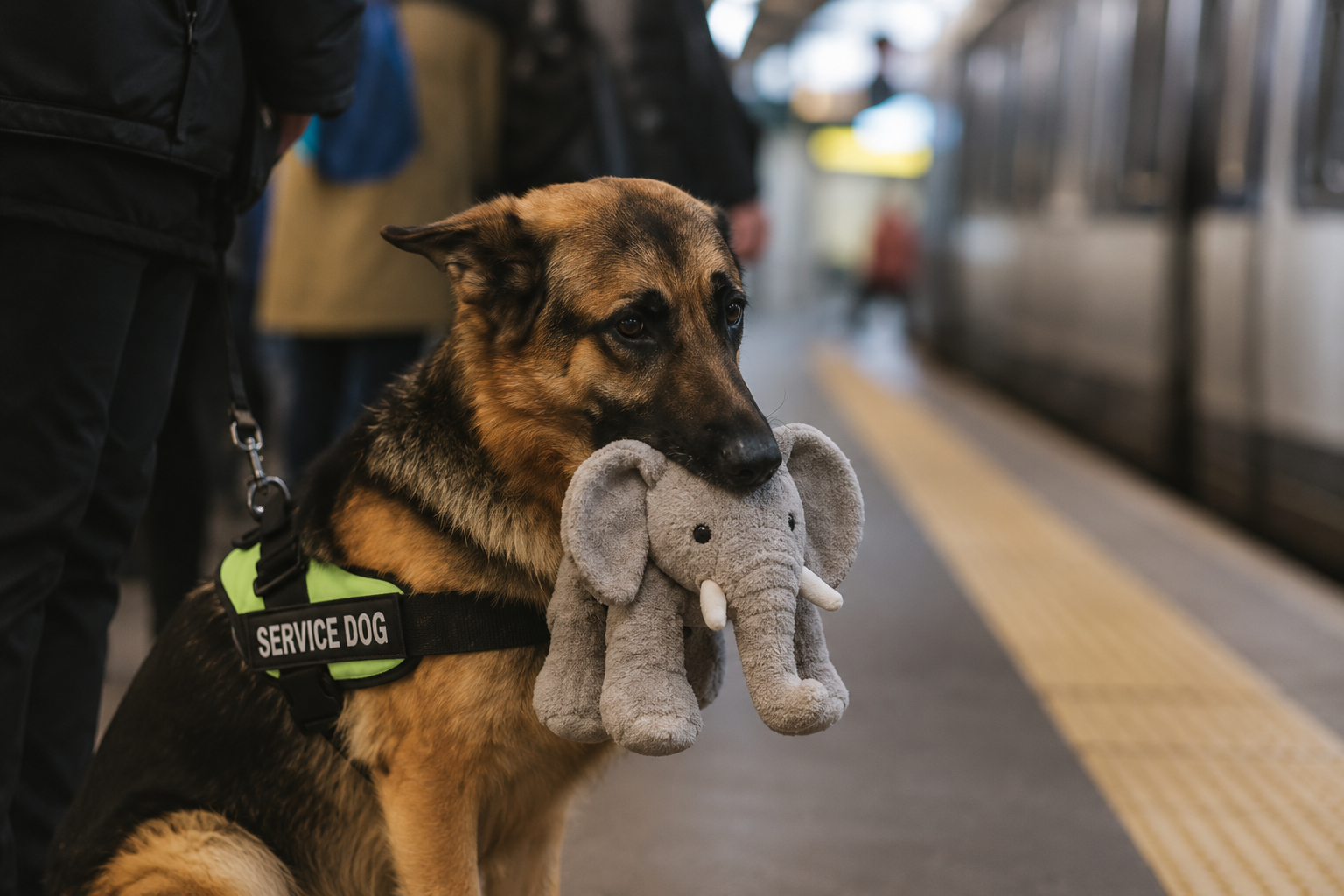
The viral Instagram post earned more than 1.47 million likes—but the plush elephant wasn't the real reason people couldn't stop sharing it.
A Viral Photo That Stopped Millions of People
| Recently, an Instagram post featuring a working dog carrying a small stuffed elephant captured more than 1.47 million likes. The caption claimed that the dog had failed its service dog assessment and was later seen quietly holding the plush toy at a train station, seeking solace in its favorite comfort object. | 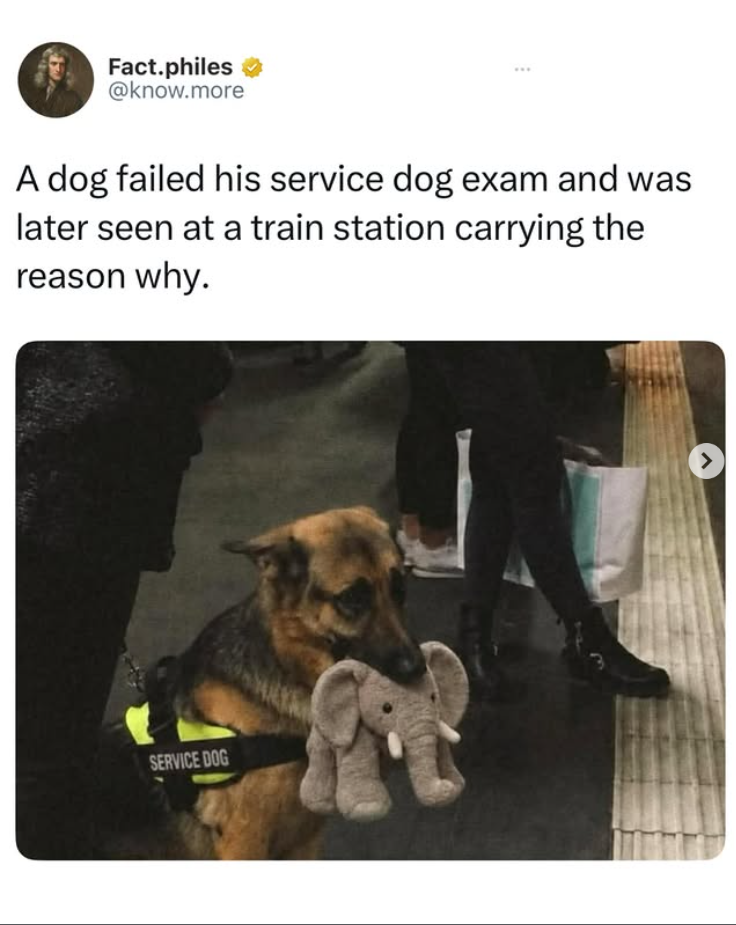 |
Whether every detail of the story is perfectly accurate or fully verifiable isn’t really the point. In the fast-paced, digitally optimized landscape of social media, viral images frequently undergo secondary transmission, shifting contexts and shedding original nuances along the way. Yet, millions of people were profoundly moved by exactly the same core imagery.
For one brief moment, the animal stopped looking like a highly trained, stoic working dog and simply looked like... a dog. It was a living being with complex emotions, visible attachments, and an innate need for something that made it feel completely safe.
Why did such an ordinary, unpolished photo resonate so deeply across the globe, cutting through the noise of modern algorithms? To understand this phenomenon, we must look past the superficial mechanics of digital trends and explore the fundamental psychology of companionship, animal behavior, and the subtle ways our domesticated companions navigate a demanding human world. This is not just a story about a viral image, nor is it merely a commentary on why animals enjoy playing. Instead, it is an exploration of security, psychological grounding, and the evolving relationship we share with the animals in our care.
Why This Photo Touched So Many People
The Power of Contrast
| In our modern society, a working dog is the ultimate symbol of discipline, confidence, unwavering responsibility, and structural reliability. Whether navigating a bustling metropolitan terminal, assisting an individual with physical challenges, or detecting hidden hazards, these animals operate under strict protocols. We expect them to be impervious to the chaotic distractions of daily life—they represent precision. | (1).png?w=1402&h=1122) |
Yet, nestled firmly within this particular dog's jaws was a small, soft, slightly worn plush elephant. This stark visual contrast created an immediate emotional bridge. It instantly dismantled the invisible barrier of formal utility, revealing the soft, sensitive creature beneath the uniform and allowing everyday viewers to feel an immediate, deeply personal connection with an animal on duty.
We Saw Vulnerability Instead of Perfection
For many observers, this viral image marked the first time they consciously recognized the quiet emotional landscape that exists beneath a working dog’s exterior. We often fall into the trap of viewing service animals as organic machines—perfectly calibrated, hyper-focused, and emotionally detached from vulnerability.
The presence of that comforting object served as a gentle reminder that perfection is an illusion. These animals experience stress, cognitive fatigue, and moments of emotional decompression just as we do. Seeing a highly trained canine seek comfort from a simple plush item validated our own hidden vulnerabilities. It reminded us that requiring a source of safety is not a sign of failure, but a natural expression of emotional depth.
We Recognized Ourselves
The universal appeal of the photograph lies in its profound anthropomorphic mirror. When we looked at that dog holding its security item amid a crowded, indifferent train station, we did not just see a canine holding a toy. We recognized our own coping mechanisms in a complex, fast-moving world. We saw our own deep-seated desires for grounding, consistency, and a sense of home when navigating unfamiliar environments.
Perhaps we weren't looking at the dog; perhaps we were seeing ourselves, searching for our own quiet anchors amidst the loud, unpredictable currents of modern life.
We Often Forget That Working Dogs Are Still Just Dogs
According to comprehensive structural frameworks established by global organizations like Guide Dogs, the American Kennel Club (AKC), and the American Veterinary Medical Association (AVMA), working dogs undergo years of rigorous physical and psychological training. These exceptional animals are carefully selected and socialized to fulfill highly specific, critical societal functions. Their roles are diverse and incredibly demanding:
-
Guide Dogs: Serving as the essential eyes for the visually impaired, managing complex obstacle avoidance, and executing intelligent disobedience when danger presents itself.
-
Search and Rescue (SAR) Dogs: Utilizing extraordinary sensory capabilities to track missing individuals across wilderness terrains, disaster zones, and collapsed structures under intense environmental pressure.
-
Police and Detection Dogs: Working alongside law enforcement agencies to identify illegal substances, track suspects, and secure public spaces with absolute focus.
-
Therapy and Service Dogs: Providing profound psychiatric and physical assistance, mitigating medical crises, and offering grounding support to individuals facing severe trauma or chronic illness.
Because their contributions are so significant, human observers routinely forget a fundamental biological reality: when they step out of their working harness or finish their operational shifts, these specialized animals remain, at their core, canine companions. They require authentic opportunities to decompress, play, and express their basic natural behaviors. The AVMA and AKC frequently emphasize that providing structured downtime is essential for preventing operational burnout in working animals. When their duty vests are removed, they enthusiastically engage in running, tracking unstructured scents, playing with high-quality dog toys, and seeking deep tactile reassurance from their primary handlers.
Every single dog—whether it is an elite search and rescue canine, a beloved family pet, or a curious young kitten navigating a living room—develops its own individual sense of comfort. This behavioral manifestation is heavily documented in veterinary science as a coping mechanism for environmental stress. Some animals find this vital grounding in rigid daily routines; others find it in familiar, unwashed scents belonging to their human owners. Some seek solace in a favorite, well-preserved blanket, and yes, some find it in a cherished dog plush toy. The core takeaway here is not that every domestic animal requires an identical item to remain happy. Rather, it highlights that every living creature possesses an innate psychological need for a distinct comfort object to anchor their emotional well-being.
It’s Never Really About the Plush Toy
The tiny stuffed elephant clutched by the viral service canine was not the true catalyst for global emotion. The physical item itself held no intrinsic magic; it merely served as a tangible representation of something infinitely vaster: comfort, security, absolute familiarity, and emotional connection. These are universal psychological pillars that transcend species boundaries. In the field of animal behavior, a dog's attachment to an inanimate object is often structurally similar to how human infants utilize transitional objects to navigate developmental anxiety and unfamiliar territories.
An animal’s attachment to a favorite comfort object often mirrors the human psychological reliance on transitional items, serving as an emotional anchor during periods of environmental stress, transition, or cognitive fatigue.
To fully appreciate why this dynamic is so powerful, we only need to look at our own human tendencies. The vast majority of adults still retain at least one item they refuse to throw away, regardless of how worn or structurally compromised it becomes. It might be an old, threadbare childhood blanket, a vintage teddy bear stored carefully in a closet, a lucky keychain attached to daily keys, a specific ring worn through decades of milestones, or a faded hoodie traveled with on every long-distance flight. Economically, these objects carry almost no market value. Emotionally, however, they are entirely irreplaceable. They are repositories of memory, physical manifestations of safety, and silent companions through life's unpredictable shifts.
While domestic pets may process psychological attachment and sensory familiarity differently from humans—relying far more heavily on olfactory cues and tactile consistency—anyone who has shared a home with a dog or cat knows they frequently cultivate intense preferences for specific items, routines, and physical companions. A young puppy might carry a specific soft item from room to room, refusing to settle down for a nap without it nearby. A mature cat might systematically seek out a particular texture of fabric whenever they require a deeper sense of security. These subtle, everyday actions demonstrate that our pets are constantly seeking ways to build a secure, predictable sanctuary within our homes.
Maybe That’s Why Pet Products Matter More Than We Think
When society analyzes the overarching pet industry, the discussion almost exclusively revolves around raw function, nutritional value, or health maintenance. We view the procurement of goods through a pragmatic lens: a durable leash keeps an active canine safe during urban walks; a heavy ceramic bowl holds their daily caloric intake; an orthopedic bed offers structural support for aging joints. These are basic necessities of life. However, when we look closer at the daily lives of our animals, it becomes abundantly clear that over time, many specialized pet products transform into something far more meaningful than simple household utility.
A thoughtfully designed toy ceases to be a brief distraction and becomes a daily companion, integrated into the morning greeting ritual. A soft, warm blanket transforms from a simple floor covering into an indispensable component of an animal’s bedtime routine, providing a familiar scent profile that signals absolute safety. A carefully selected dog plush toy becomes the dedicated security item a pet carries gently from room to room, presenting it proudly to visitors or curling tightly around it during intense thunderstorms. In these instances, the material composition or manufacturing cost of the product itself is not what truly matters. What matters is the rich, complex relationship, deep sense of trust, and shared history that gradually crystallizes around it.
This reality is precisely why choosing the right items for our companions is so deeply personal. When we invest in high-quality puppy toys, engaging cat toys, or specialized interactive dog toys, we are not merely purchasing a temporary distraction to keep our pets occupied while we work. We are introducing potential emotional anchors into their environment. We are providing them with the raw tools to build their own routines, discover personal coping mechanisms, and articulate their inner emotional lives. The everyday objects we introduce into our living spaces ultimately shape how our pets process loneliness, how they celebrate joy, and how they seek comfort when the world around them becomes overly loud or confusing.
The Best Pet Products Aren’t Always the Most Expensive—They’re the Ones Pets Choose
 |
The viral working dog did not make millions of people emotional because its stuffed elephant looked exceptionally luxurious, rare, or costly. In all probability, it was a modest, mass-produced item. The profound emotional weight of the image stemmed entirely from one undeniable truth: the dog had actively chosen it. It was the animal’s personal preference, its chosen anchor of stability within a crowded, sterile transit environment. This behavior reflects a familiar dynamic that almost every seasoned pet owner has witnessed firsthand at some point in their lives. |
You can bring home an array of advanced, high-end gadgets, only to watch your dog completely ignore ten pristine, expensive options in favor of carrying around one old, faded plush friend that has lost half its stuffing. A cat will routinely bypass a luxury, multi-tiered designer tower to sleep blissfully inside the discarded cardboard box it was shipped in. Animals do not evaluate the world through price tags, premium branding, or modern aesthetic trends. They connect with objects based on comfort, tactile responsiveness, and how seamlessly those items integrate into their everyday lived experiences. They choose the things that make them feel safe, understood, and grounded.
True value in pet manufacturing is defined by this organic choice. It is about creating items that respect the natural instincts, sensory needs, and emotional variations of animals. Whether developing durable pet toys for high-energy breeds or soft, comforting items for anxious rescues, the ultimate goal should always be to design products that invite this deep, organic connection. When an animal chooses an item, that product transitions from a store-bought commodity into an authentic part of their life story.
Conclusion
At Apripex, we have always maintained the foundational belief that the very best pet products are not those that simply occupy space in a home, but those that successfully become an integrated part of a pet’s personal journey. Our design philosophy is rooted in a deep respect for the emotional lives of animals, acknowledging that they require more than just physical sustenance—they require emotional grounding, mental stimulation, and an enduring sense of security.
Whether you are actively searching for engaging, durable dog toys to stimulate an energetic companion, comforting dog plush toys to provide a soothing anchor for an anxious pet, fun, instinct-driven cat toys to ignite a feline's natural curiosity, or thoughtful, everyday pet accessories, the ultimate objective is never simply to hand your pet something novel. Rather, it is about creating meaningful opportunities for them to discover an item they might truly, unconditionally love. For those seeking a more personal touch, exploring curated dog gifts, meaningful custom pet gifts, or personalized pet gifts offers a beautiful way to celebrate and honor the unique, irreplaceable bond shared between a human and their animal companion.
Ultimately, the viral image of the working dog and its small stuffed elephant serves as a beautiful, lasting reminder for all of us. Our pets give us their unwavering loyalty, their hard work, and their absolute trust every single day. In return, it is our responsibility to provide them with environments where they feel safe, cherished, and entirely free to be themselves. Because as millions of people around the world realized in that singular, viral moment: sometimes, the smallest, simplest companion becomes the one they never want to let go of.