
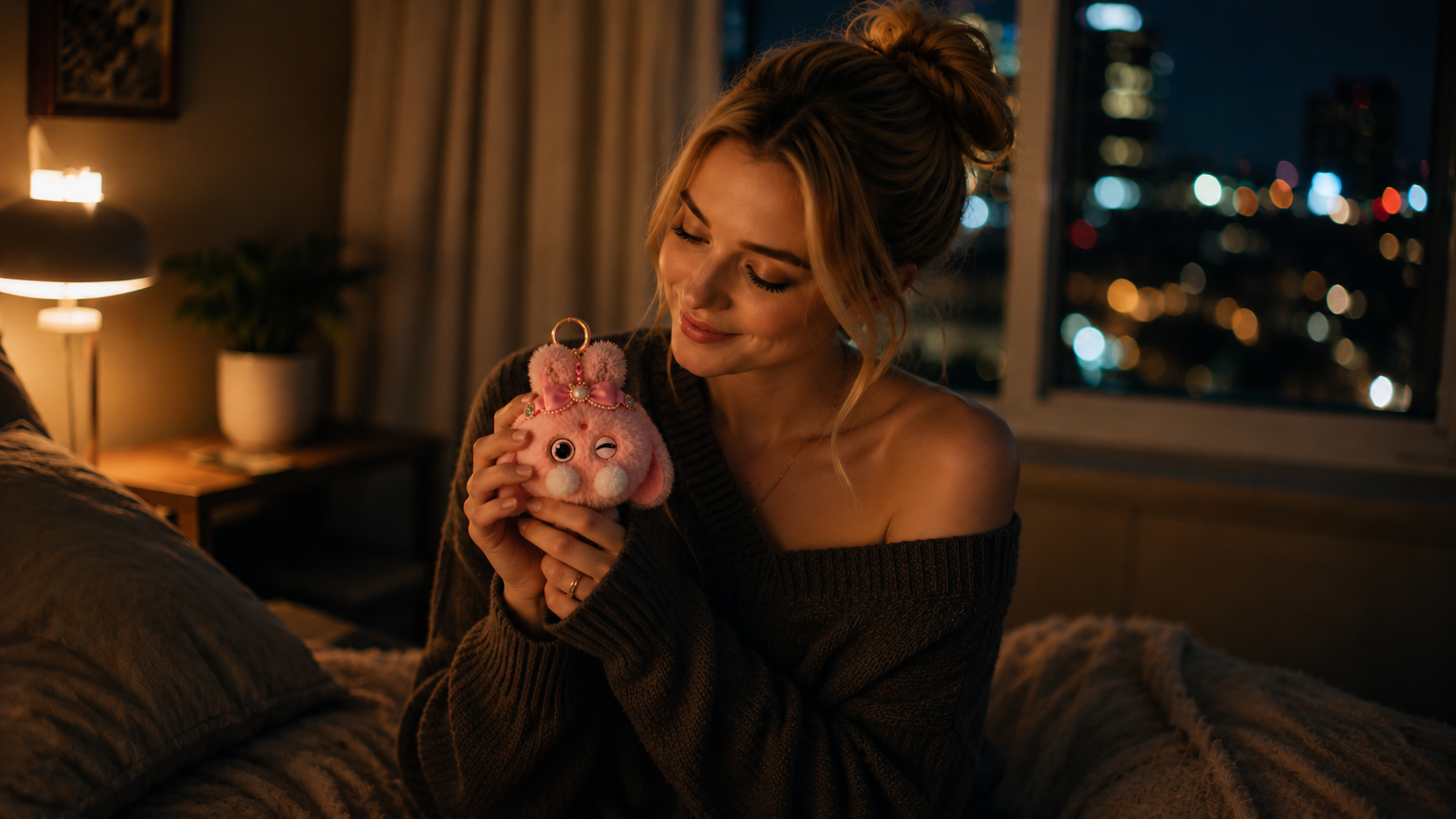
When we think of adult emotional support plushies, we picture a soft, silent sanctuary at the end of a burnout-heavy workday. But lately, tech corporations have been trying to force AI plushies Doll into our bedrooms, sparking massive backlash. If you browse online communities like Reddit
"I don’t understand why corporations think we want AI in everything. I just want a silent companion to help me decompress, not a cloud-connected corporate wiretap in my bedroom." — A prominent collector on Reddit
you’ll instantly notice a deep sense of dread and aversion toward these "smart" toys. Why are 20-somethings and Millennial collectors fighting back so hard against automated companions? Let’s address the biggest fears behind AI plush toys—and explore what a truly safe emotional companion looks like in the digital era.
1. The Uncanny Valley: Why Smart Plush Companions Are Raising Red Flags
For decades, plushies have been the ultimate subculture for emotional healing. They don't judge, they don't talk back, and they certainly don't harvest your data. However, the sudden influx of generative AI into consumer hardware has shattered this boundary.
One of the loudest warnings on Reddit centers around child development and safety. Users frequently point out that Large Language Models (LLMs) suffer from "hallucinations"—they fabricate facts, present biases as truths, and can unexpectedly say things that are completely unsafe or creepy for a vulnerable mind to hear. As one prominent Reddit collector noted, an innocent conversation could easily veer into something a kid really shouldn't hear.
When a toy possesses an unpredictable AI brain, it triggers the "Uncanny Valley" effect. It looks like a familiar, comforting teddy bear, but it speaks with an artificial, disembodied intelligence. This cognitive dissonance doesn't soothe anxiety; it amplifies it.
Redefining the Audience: AI is Not for Kids
We completely agree with the internet's skepticism: AI is absolutely not suitable for toddlers or young children. Children require human mirroring and predictable environments to develop secure attachment styles. A glitching chatbot wrapped in faux fur is a parenting hazard, not a toy.
Instead, the true calling for advanced emotional technology lies with mature adults (20+). Gen Z and Millennials don’t need an AI to teach them the alphabet or tell them bedtime stories; they need a private, non-judgmental "sounding board" to decompress after an exhausting 9-to-5 grind. Adults understand the boundaries of technology. By shifting the demographic away from children, we eliminate the developmental risks and treat smart companionship as a sophisticated mental health tool for consenting adults who consciously seek a digital sounding board.
2. Who is Listening? Overcoming Smart Toys Data Collection Concerns
In the modern e-commerce landscape, consumer trust is incredibly fragile. Privacy is the ultimate dealbreaker when it comes to smart hardware. The community’s hesitation stems from a vital, urgent question: "What data is being recorded or used in this case?"
Traditional smart toys operate on a cloud-based architecture. Every time a user speaks to the device, the audio stream is compressed, sent to an external corporate server, processed by a third-party API, and sent back. This means your private conversations, your midnight anxieties, and your tears are being stored on a server somewhere, potentially being used to "train the model" or, worse, profile your consumer behavior for targeted ads. Nobody wants a stuffed animal that functions as a hidden corporate wiretap in their private sanctuary.
The Solution: Non-Invasive, Private Shelters
A trustworthy emotional companion must prioritize absolute data autonomy. Instead of relying on data-hungry corporate clouds that treat your vulnerability as tech-fuel, the future belongs to local encryption and sandbox processing.
True smart plush companions for adults should feature hardware-level privacy toggles—physical switches that mechanically disconnect the power to the microphone. Furthermore, firmware should be designed with an immediate-wipe protocol: the mic only activates when you intentionally trigger a physical button, the conversation is processed locally or via encrypted end-to-end tokens, and the data is wiped completely from the cache the moment the interaction ends. Your secrets must remain strictly between you and your plushie.
3. Stripping the Soul: Why We Resist "AI Everything"
"I don’t understand why corporations think we want AI in everything," shared one Redditor, capturing the profound digital fatigue of 2026. Tech fatigue is a real psychological phenomenon among 20-somethings. We stare at Slack screens all day, manage automated emails, scroll through algorithmically generated feeds, and now, corporations want to automate our comfort objects too.
For many, plushie collecting is a sacred escape from hyper-connectivity. It is a rebellion against the digital world. Shoving an unprompted, fast-talking algorithm into a teddy bear strips away the "true meaning" of having a comforting, silent confidant. It turns a tool of mindfulness into another piece of noisy, distracting tech.
| Feature | Mass-Produced AI Toys | Artisan Emotional Companions |
| Core Material | Synthetic polyester, cheap plastic internals | Artisan custom plush, premium organic cotton |
| Data Privacy | Cloud-stored, commercial data tracking | 100% Local processing or instant-wipe firmware |
| Interaction Style | Hyperactive, loud, unpredictable AI chat | Passive, low-frequency, intuitive listening |
| Primary Value | Novelty tech gimmick |
Lifelong keepsake & tactile comfort |
|
|
|
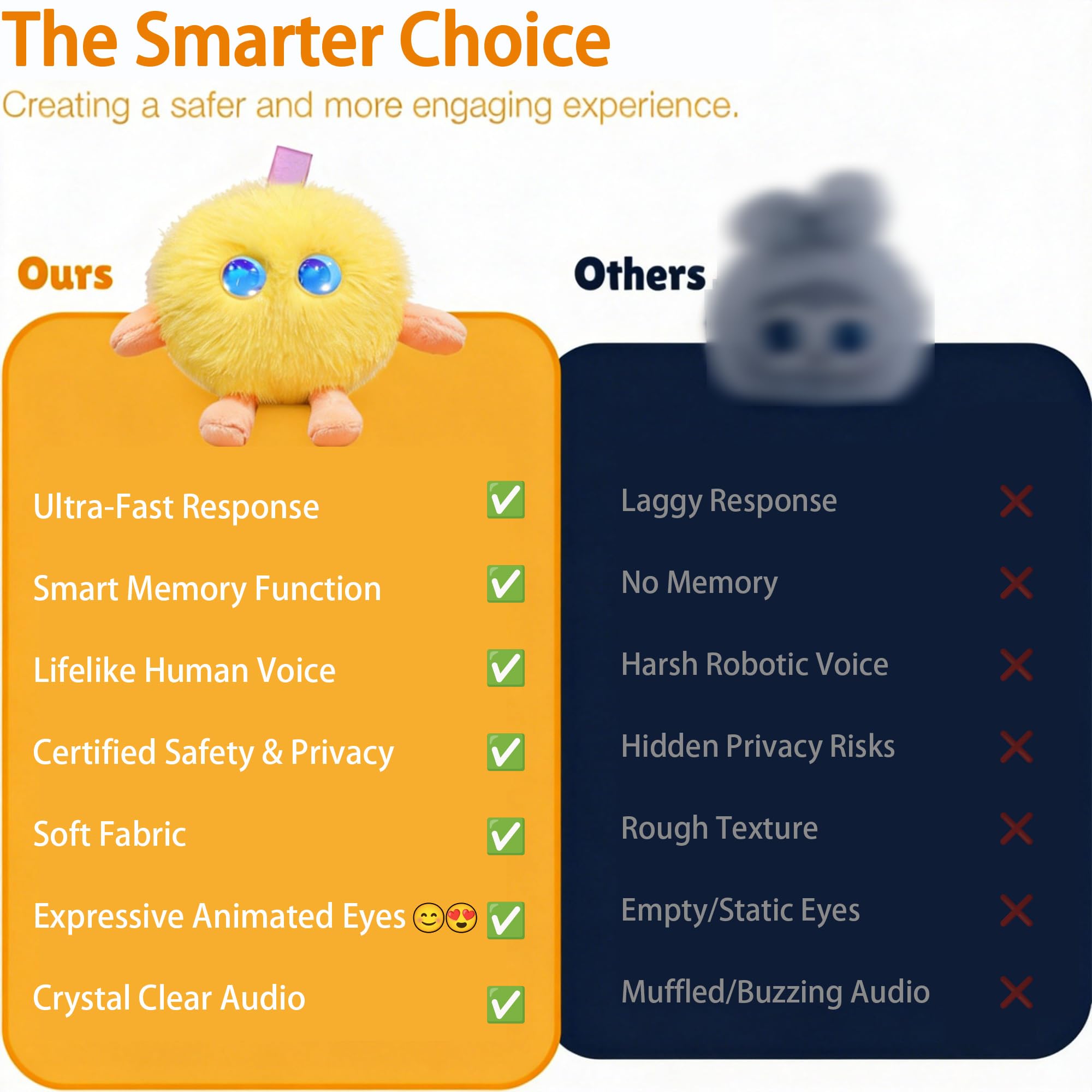
The Perfect Balance: Artisan Texture Meets Invisible Tech
Technology shouldn't dictate how you feel; it should adapt to your silence. The ultimate antidote to corporate overreach is preserving the artisan soul.
A meticulously sewn custom plushie retains a human artist's warmth—something an algorithm can never replicate. The premium texture, the weight of high-quality filling, and the unique touch of a hand-crafted piece provide what psychologists call "tactile comfort."
If technology is introduced into this space, it must be invisible, passive, and slow. It shouldn't scream "AI" or try to start conversations unprompted. It should look, feel, and smell like a traditional, soft plushie. The smart features should be a hidden layer—a gentle, low-frequency listening feature hidden deep inside, acting purely as a secure journal or a breathing-simulator to calm panic attacks. It is only there if you choose to awaken it; otherwise, it remains a silent, soft guardian.
4. The Rebirth of the Smart Companion: Introducing a Safe, Artisan AI Doll
If the current market is flooded with creepy, privacy-invasive gadgets, does that mean we should banish technology from our emotional lives entirely? Not necessarily. The solution isn't to reject artificial intelligence; it is to reimagine how AI is housed.
Technology shouldn't dictate how you feel; it should adapt to your silence. This is exactly why we created our specialized AI Doll collection—a thoughtful response to the digital fatigue of 2026. We didn’t build a loud, mass-produced robot to babysit children; we crafted a sophisticated, private mental health tool designed exclusively for mature adults navigating modern burnout.
The Perfect Balance: Hand-Crafted Outer Shell Meets Invisible Tech
The ultimate antidote to corporate overreach is preserving the artisan soul. Each of our AI Dolls starts not in a plastics factory, but in the hands of independent human craftspeople. Every custom-sewn plush companion retains an authentic warmth that no algorithm can ever replicate. The comforting weight of premium filling and high-end textiles provide the essential tactile anchor needed to soothe nighttime anxiety.
Inside this traditional, soft exterior lies a completely redefined tech core. Our technology is designed to be invisible, passive, and slow.
Our AI Doll never screams for attention, never initiates unprompted corporate chatter, and features a strict hardware-level privacy sandbox. The microphone only activates when you consciously hold its hand or press a mechanical switch, and your conversations are instantly wiped from the local cache the moment you finish speaking. It functions purely as a secure, ambient journal or a breathing-simulator to calm panic attacks. It is an intelligent companion that respects your space, acting as a silent, soft guardian when you want to rest, and a deeply understanding, private sounding board when you choose to share your day.
FAQ Section
-
Q: Why are internet communities so skeptical of AI plushies?
-
A: The main concerns involve severe privacy tracking due to built-in microphones, data harvesting by corporate sellers, and the fact that AI-generated content often exploits independent human artists without permission.
-
-
Q: Are there safer alternatives to AI plush toys for emotional relief?
-
A: Yes. Many community members highly recommend voice-recorded plushies as a wonderful alternative. Recording a real loved one's voice provides immense tactile comfort without any corporate data tracking or uncanny valley creepiness.
-
-
Q: How can I tell if an online plushie seller is authentically crafting items or using AI fraud?
-
A: Look for common red flags like mismatched reflections in product photos, odd structural artifacts, or generic, chatbot-style language in product descriptions. When in doubt, support independent brands who openly share their real hand-crafting process.
-
-
Q: Can a well-designed AI companion actually help with adult burnout?
-
A: Yes, but only if it is completely passive and private. When tech acts as a closed-loop listening tool without cloud logging, it provides a safe psychological "sounding board" for adults to regulate their nervous systems after high-stress days.
-
Ready to Meet a Companion Who Truly Listens—Without Compromising Your Privacy?
Modern life in 2026 is noisy enough. You don’t need another nagging algorithm or a plastic gadget that harvests your vulnerability for corporate profit. You deserve a sanctuary.
At Apripex, we believe that the future of comfort lies in the perfect balance of human warmth and mindful technology. Our exclusive AI Doll collection is designed from the ground up for mature adults who need a secure, private space to decompress. Wrapped in a beautifully artisan hand-crafted shell designed by independent creators, each companion functions as a passive, local-encrypted emotional sounding board—meaning your late-night thoughts and secrets stay strictly between you and your plushie.
No cloud tracking. No creepy corporate listening. Just soft, tactile comfort paired with a gentle, intelligent soul that respects your silence.
👉 [Discover Your Safe Space: Explore the Apripex AI Doll Collection Today]