
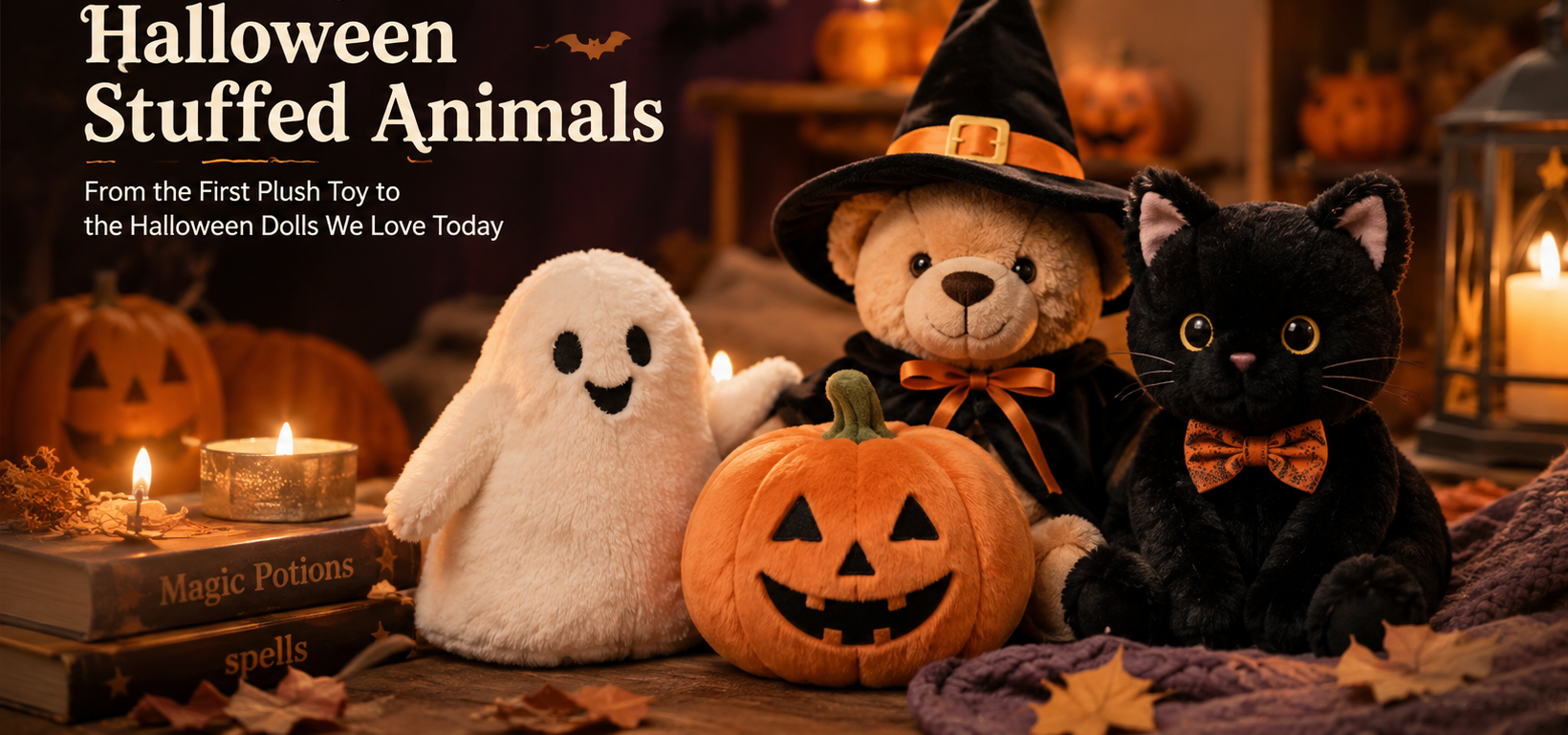
Halloween is just around the corner. Soon, pumpkins will appear on front porches, costumes will fill store shelves, and children will start thinking about trick-or-treating and candy. But there is another Halloween trend that has become increasingly hard to miss: Halloween stuffed animals.
Soft ghosts sit on bookshelves. Little pumpkin animals appear on sofas. Black cats, witches, monsters, and other spooky characters are turned into cuddly plush toys. Some are bought as decorations, some as gifts, and some simply because they are too cute to leave behind.
And that raises a surprisingly interesting question: Who decided that Halloween was a good time to give someone a stuffed animal?
Halloween is traditionally associated with costumes, candy, pumpkins, ghosts, and things that are supposed to scare us. A soft toy seems almost like the opposite of everything spooky. So how did Halloween and stuffed animals eventually become part of the same tradition?
To answer that question, we have to go much further back than the modern Halloween aisle. We have to look at the history of Halloween itself, the history of dolls and stuffed animals, and the moment when an ordinary toy became something much more meaningful: a character.
Before Halloween Plush Toys, There Were Dolls
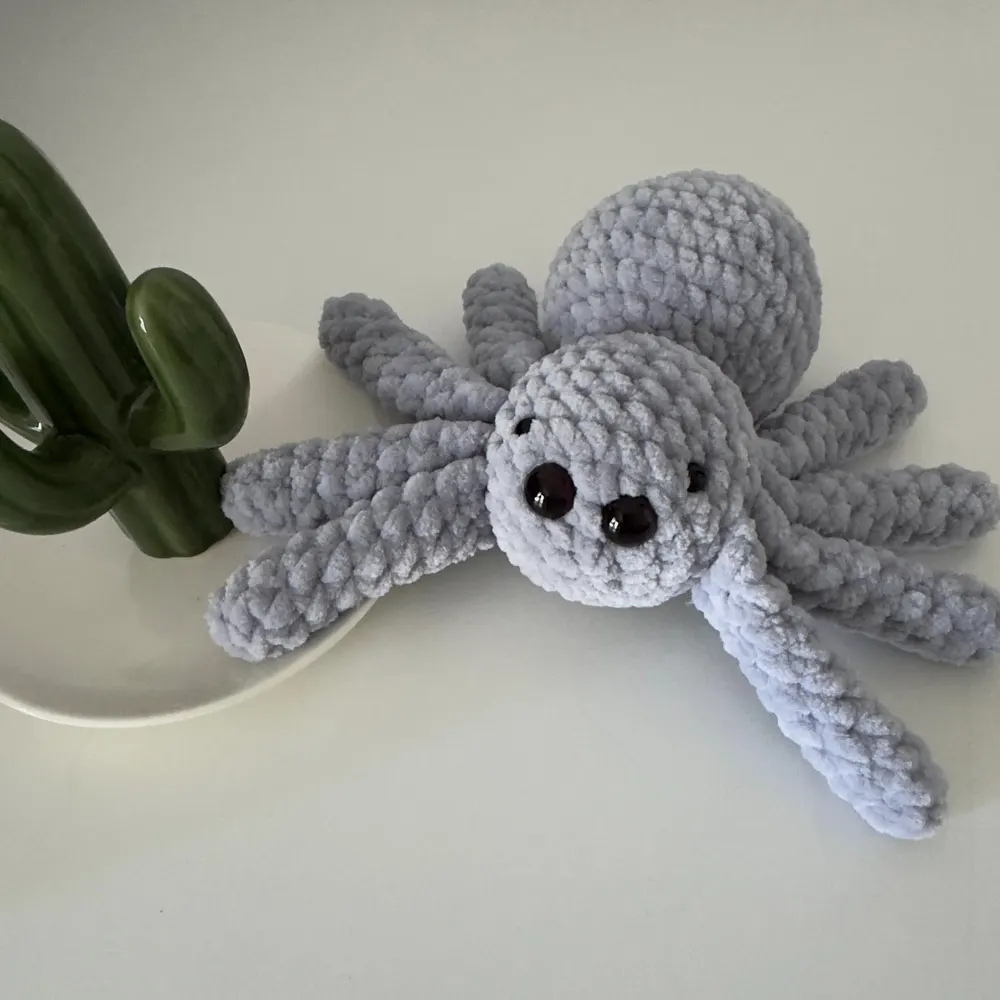
Long before anyone had a Halloween ghost plush sitting on a shelf, people were making dolls and soft figures for children. Dolls have existed in many forms throughout human history, including figures made from materials such as wood, clay, cloth, and other natural materials. But it is important to distinguish an ancient doll from what we now call a stuffed animal or plush toy.
A doll can represent a person, an animal, or even an imaginary character. A stuffed animal, by contrast, is usually a soft toy designed to resemble an animal. The modern plush toy therefore has a much more recent history than the basic idea of a doll.
 |
What makes this history especially interesting is that people did not simply invent stuffed animals because they needed another kind of toy. Over time, toys became increasingly connected to imagination. An object could represent an animal, but it could also become a companion, a character, or something that belonged to a child's personal world. That transformation would become especially important in the early twentieth century, when one German toy company helped change the way people thought about soft animal toys. |
The Steiff Bear Changed the History of Plush Toys
The story of modern plush animals cannot be told without mentioning Steiff.
Founded by Margarete Steiff in Germany, the company originally became known for felt products and animal figures before developing increasingly sophisticated toys. One of the most fascinating parts of the story is that the company's early success was not even a bear. Richard Steiff, Margarete's nephew, became fascinated with bears after observing them at a zoo and began developing animal toys based on their appearance and movement.
In 1902, Richard Steiff designed the Bear 55PB, a mohair bear with movable joints. Steiff describes it as the world's first jointed teddy bear, and the company's historical records trace the development of its early bears through the beginning of the twentieth century.
This was an important change. A soft animal was no longer simply a piece of fabric shaped like an animal. With its recognizable appearance and movable limbs, the bear could begin to feel like a character.
And that idea would soon become even more powerful.
Then Came the Teddy Bear
Around the same time, another bear was becoming famous on the other side of the Atlantic.
In 1902, President Theodore Roosevelt took part in a bear hunt in Mississippi. When a bear was captured and tied to a tree, Roosevelt refused to shoot it, considering the situation unsportsmanlike. The incident was turned into a political cartoon by Clifford Berryman, and the image of Roosevelt and the bear quickly attracted public attention.
The story inspired Brooklyn toy makers Rose and Morris Michtom to create a stuffed bear. They eventually named it after Roosevelt's nickname, “Teddy,” helping give birth to one of the most famous toy characters in history. The Smithsonian's National Museum of American History documents the connection between the 1902 incident, Berryman's cartoon, and the early Teddy Bear craze.
Steiff's own history tells a related story from the European side, noting Richard Steiff's development of the Bear 55PB in 1902 and the company's subsequent development of its teddy bears.
The important point is not simply who made the first teddy bear. The bigger story is what happened next.
The teddy bear became more than an animal-shaped toy. It became a recognizable character with a name, a personality, and a story. And once toys could become characters, almost anything could eventually become a character.
Including the things associated with Halloween.
So What Does a Teddy Bear Have to Do With Halloween?
At first glance, almost nothing.But look more closely at what Halloween actually is today.
Halloween is filled with characters: ghosts, witches, black cats, bats, pumpkins, skeletons, monsters, and other creatures that have been reimagined over generations. These symbols were not all part of Halloween from the beginning, and their meanings have changed over time.
The Library of Congress traces Halloween's roots to the ancient Celtic festival of Samhain and explains how later Christian traditions, including All Saints' Day and All Hallows' Eve, became part of the holiday's long evolution. It also documents the histories behind familiar Halloween symbols such as ghosts, jack-o'-lanterns, black cats, costumes, and trick-or-treating.
That history matters because Halloween has always been about more than being frightened.
It is also about turning frightening ideas into stories, costumes, characters, and experiences that people can share.
A ghost can be scary, but it can also be funny. A black cat can be mysterious, but it can also become a cute character. A pumpkin can be part of a harvest tradition, but it can also become a smiling face sitting on a doorstep.
And once an imaginary character can be given a face, a personality, and a physical form, turning that character into a plush toy feels surprisingly natural.
How Halloween Became a Children's Celebration
The Halloween that people recognize today did not appear all at once. It developed over centuries, and many of the traditions associated with modern Halloween gradually changed meaning.
The Library of Congress explains that traditions such as costumes and disguises can be connected to much older Halloween practices, while trick-or-treating developed through several different traditions involving costumes, food, money, and offerings.
HISTORY similarly traces trick-or-treating through Celtic, Christian, medieval, Scottish, Irish, and later American traditions. In some earlier versions of these customs, people went from house to house receiving food, money, or other offerings in exchange for prayers, songs, jokes, performances, or simply appearing in costume. Modern American trick-or-treating gradually became a much more organized children's tradition during the twentieth century.
Halloween became increasingly associated with children, costumes, parties, treats, and playful characters. Once that happened, it was only natural for the world of children's toys to enter the celebration.
Halloween Wasn't Always About Candy
This may be one of the most surprising parts of the story.Today, when most people hear “Halloween,” they immediately think of candy. But candy was not always the only thing children received.
The Library of Congress notes that before candy became dominant, Halloween treats could include fruit, nuts, coins, and toys. Trick-or-treating grew rapidly in popularity in the United States during the twentieth century, and candy companies eventually helped turn individually wrapped candy into one of the defining features of modern Halloween.
That detail changes the way we think about Halloween gifts.
The tradition was never simply:
Halloween = candy.
It was closer to:
Halloween = dressing up, visiting others, performing, and receiving something in return.
What that “something” was changed over time.
Food could be given. Money could be given. Candy could be given. And eventually, toys could be given too.So perhaps the idea of giving a stuffed animal on Halloween isn't as strange as it first appears.
When Did Halloween Characters Become Toys?
There probably wasn't one person who suddenly decided, “Halloween should have stuffed animals.”
Instead, two cultural trends gradually moved toward each other.
The first was the transformation of Halloween characters. Ghosts, black cats, pumpkins, witches, bats, and monsters increasingly became recognizable visual characters that could appear on costumes, decorations, illustrations, cards, toys, and eventually plush products.
The second was the transformation of stuffed animals. Teddy bears had already demonstrated that a soft animal could become much more than a toy. It could have a name, a personality, an emotional connection, and even its own story.
Put those two ideas together and the modern Halloween plush becomes almost inevitable.
A ghost does not have to remain a picture on a Halloween card. It can become a little ghost you can hold.A pumpkin does not have to remain a carved decoration. It can become a character.A black cat does not have to represent something mysterious or frightening. It can become a soft companion.
In other words, stuffed animals gave Halloween characters a physical form.
So, What Was the First Halloween Stuffed Animal?
This is where the original question gets a little more complicated.
Unlike the history of the Teddy Bear, there is no single stuffed animal that can confidently be identified as the world's first Halloween plush toy. The category developed gradually rather than appearing through one famous invention.
That may actually be the more interesting answer.
Halloween already had its characters. Stuffed animals already had their place in children's lives. Halloween became increasingly centered on children, costumes, treats, and playful experiences. Toys became increasingly character-driven. Eventually, these worlds naturally overlapped.
The history of Halloween itself is also a story of transformation. David J. Skal's Death Makes a Holiday: A Cultural History of Halloween, held by Smithsonian Libraries and Archives, examines how Halloween evolved from older traditions and legends into the complex cultural celebration recognized today.
So instead of looking for one “first Halloween stuffed animal,” it may be more useful to look at the much longer journey that made Halloween plush toys possible.
Why Did People Start Giving Stuffed Animals for Halloween?
There is another reason Halloween plush toys make sense: they last longer than the celebration itself.
Candy disappears. A costume may be worn once or twice. A Halloween decoration might return to a storage box for eleven months.
A stuffed animal can stay.
A child can give it a name, sleep with it, put it on a bed, carry it around the house, or bring it out again when October returns. What began as a seasonal Halloween gift can eventually become part of someone's childhood memories.
This is perhaps one of the biggest differences between a Halloween treat and a Halloween toy.
Candy gives you a moment. A toy can give you a memory.
That may help explain why plush characters work so well as seasonal gifts. They are not limited to the few hours of Halloween night. They can continue the story long after the pumpkins have disappeared from the porch.
From Teddy Bears to Halloween Dolls
Look at the history of the stuffed animal this way and the connection becomes clearer.
The early stuffed animal transformed a material object into the shape of an animal. The Steiff Bear helped push that idea toward more sophisticated, recognizable animal characters. The Teddy Bear demonstrated how quickly a toy could become a cultural icon with a name and a story. Halloween, meanwhile, continued transforming its own symbols into characters that could be dressed up, decorated, illustrated, collected, and shared.
The modern Halloween plush sits right at the intersection of these traditions.
It can be a toy for a child, a decoration for a home, a character in a seasonal display, a collectible for an adult, or simply a small reminder of a particular Halloween.
That is why a cute ghost sitting on a shelf doesn't necessarily feel strange anymore.
It feels familiar.
Why Halloween Dolls Still Matter Today
Perhaps the biggest change is that Halloween itself has become much broader than its older reputation suggests.
For some people, Halloween is still about ghosts, haunted houses, and horror. For others, it is about pumpkin carving, family traditions, costumes, decorating the house, watching seasonal movies, baking, parties, or simply enjoying the atmosphere of autumn.
That softer side of Halloween has created space for a different kind of character.
Not every ghost needs to be frightening.
Not every monster needs to be scary.
Sometimes a Halloween character can simply be cute.And that may be why Halloween plush toys continue to find their place in modern homes. They fit naturally into a holiday that has spent centuries turning old traditions into new forms of entertainment, storytelling, and shared memories.
The little ghost on a bookshelf may look like a simple seasonal decoration, but its history reaches much further back than Halloween itself.
The Latest Chapter in a Very Old Story
So, who decided that people should give stuffed animals for Halloween?
Maybe there wasn't one person.
There was no single inventor who connected ghosts, pumpkins, black cats, and plush toys overnight. Instead, the tradition seems to have grown from several much older ideas coming together: the human habit of making dolls, the development of soft animal toys, the rise of character-driven toys such as the Teddy Bear, and Halloween's transformation into a playful celebration centered increasingly around children, costumes, treats, and imagination.
From early dolls to Steiff bears, from the Teddy Bear to today's Halloween ghosts and pumpkin characters, the history of plush toys is really a history of turning imagination into something we can hold.
And perhaps that's why Halloween dolls feel so natural today.
They aren't really a new tradition. They're simply the latest chapter in a very old story.