

Introduce:
It is a quiet Tuesday afternoon. You are sitting at your desk, deeply focused on an important video call or trying to finish household chores, when you hear a soft, repetitive scratching sound. You look down, only to find your favorite pair of leather shoes being systematically dismantled by a pair of innocent-looking eyes.
Your first instinct might be confusion. After all, you took your dog on a long walk this morning, and they had a full bowl of food. Why are they acting out?
This scenario is familiar to dog owners across North America. Many of us try to build a healthy dog lifestyle by focusing entirely on physical exercise. We assume that if we run our dogs in the park or play fetch until they pant, we have fulfilled their daily needs.
However, canine behaviorists and veterinary experts suggest that physical exertion is only one part of the equation. To truly raise a calm, content dog, we must address their minds.
This is where the science of dog enrichment toys comes in. By understanding how mental fatigue works, how to satisfy ancestral instincts, and how to use interactive play, we can help our pets find relief from the quiet burden of domestic boredom.
1. Physical vs. Mental Fatigue: Why Your Dog’s Brain Needs a Workout
There is a popular saying in the pet community: "A tired dog is a good dog." While there is truth to this, pet behavior experts, including those at the American Kennel Club (AKC), clarify that true exhaustion is not just muscular—it is cognitive.
When we only exercise a dog physically, we are often just building their athletic endurance. Over time, that 30-minute run no longer tires them out; they require 45 minutes, then an hour, turning them into high-stamina athletes who still don't know how to settle down when they get inside.
| PHYSICAL EXERCISE ONLY | BALANCED ENRICHMENT |
| Build Cardiovascular Endurance | Satisfy Natural Foraging Needs |
| ⬇️ | ⬇️ |
| High-Stamina, Still-Bored Dog | Calm, Rested, & Content Pet |
On the other hand, mental stimulation for dogs is an incredibly efficient way to burn excess energy. Behaviorists estimate that 15 minutes of mental brain games can tire a dog out more than a 30-minute walk.
When a dog has to solve a puzzle, sniff out a hidden treat, or figure out how to extract a toy from an obstacle, their brain is working at maximum capacity. This cognitive effort burns glucose in the brain, inducing a natural, peaceful state of relaxation.
For parents looking for effective pet wellness tips, introducing dog brain games is often the easiest way to transform a hyperactive, attention-seeking pet into a calm companion, paving the way for better sleep for dogs at night.
2. The Evolutionary Cost of Boredom: Why Domestic Pups Need "Jobs"
To understand why dogs get bored in the first place, we have to look at their evolutionary history, which is well-documented on resources like Wikipedia's page on Dog Behavior. Before dogs became beloved members of our families, their wild ancestors spent up to 70% of their waking hours foraging, hunting, tracking scents, and navigating complex environments. Every meal was a puzzle that required focus, coordination, and mental energy to solve.
In our modern homes, we have removed all of these challenges. We deliver balanced meals in shiny bowls twice a day, completely free of charge. While this keeps them safe and well-fed, it also leaves them with a massive surplus of evolutionary energy and nothing to direct it toward.
When a dog is left with no "job" to do, they will inevitably invent one for themselves. Unfortunately, these self-assigned jobs usually involve destructive behaviors:
-
Digging up the backyard lawn
-
Chewing on furniture corners or baseboards
-
Excessive barking at the window at every passing car
-
Anxiously pacing around the house
Veterinarians point out that these destructive habits are rarely signs of a "bad" dog; they are simply a cry for dog enrichment. By introducing dog boredom toys that mimic natural foraging and hunting tasks, we can redirect these instinctual urges into safe, constructive outlets.
Instead of chewing on your shoes, your dog can focus their natural problem-solving skills on satisfying, expert-approved challenges.
3. The Power of Scent: Stimulating Your Dog's Superpower with Snuffling
If you want to know how to keep a bored dog entertained, the secret lies in their nose. A dog's sense of smell is estimated to be between 10,000 and 100,000 times more sensitive than ours. While humans view the world primarily through sight, dogs "read" their environment through scents.
When a dog sniffs, their brain processes a massive stream of data, which stimulates their cognitive pathways and triggers the release of dopamine—the hormone associated with pleasure and relaxation.
Canine behaviorists recommend using a snuffle toy to harness this sensory superpower indoors. Snuffling allows dogs to engage in "appetitive behavior," which is the investigative phase of searching for food. This activity has been scientifically shown to lower a dog's heart rate, decrease cortisol levels, and provide excellent stress relief for pets.
If you are looking for a gentle, approachable way to introduce olfactory play to your pet, our neighborhood shop, apripex, offers a wonderful option: the Pea Pod Squeaky Dog Toy - Interactive Plush Snuffle Toy.
| APRIPEX PEA POD INTERACTIVE PLUSH SNUFFLE TOY |
|
|
|
|
|
This interactive toy mimics the natural challenge of foraging. You can tuck dry kibble or small treats deep inside the folds of the pea pod and challenge your dog to sniff them out.
To get their reward, your dog has to use their nose, tongue, and paws to pry the squeaky peas out of the pod. This simple act of "working" for their food keeps their mind highly focused and engaged.
It is one of the best enrichment toys for puppies who are still learning to focus, as well as senior dogs who need a low-impact, stimulating indoor activity. After a few minutes of solving the pea pod puzzle, you'll likely find your pup curried up contentedly on their calming pet bed, drifting off into a deep sleep. |
|

👉:apripex.com/products/pea-pod-toy
4. Satisfying the Predator Sequence: Why Squeaks and Shakes Provide Healthy Outlets
Have you ever wondered why your dog goes absolutely wild for toys that make high-pitched noises? Why do they grab a plush toy and shake it side-to-side with intense focus?
This behavior is rooted in the predatory motor patterns of wild canines. The predatory sequence consists of several distinct phases:
Orient→Eye→Stalk→Chase→Grab-Bite→Kill-BiteIn domestic dogs, certain parts of this sequence have been bred out or minimized, but the urge to "grab-bite" and "kill-bite" remains incredibly strong, particularly in terriers, retrievers, and herding breeds.
When a dog hears a squeaking sound, their brain interprets it as the sound of small prey. Biting down on a squeaky dog toy and shaking it allows them to safely express these predatory instincts in a controlled environment.
 |
Without a proper toy to satisfy this urge, dogs may look for other objects to shake and shred—such as your throw pillows, toilet paper rolls, or laundry. Providing a durable, soft plush toy with a built-in squeaker allows them to channel this natural drive without causing household damage.
For a classic, reliable option to satisfy this play style, apripex features a beloved favorite: the Squeaky Plush Duck Dog Toy for Boredom Relief.
This plush duck is designed to be the ultimate boredom buster. It features a soft, durable body that is easy for dogs of all sizes to carry, flip, and catch. Inside, a high-quality squeaker provides immediate auditory feedback every time your dog bites down.
Whether they are tossing it in the air, carrying it around like a prized possession, or gently squeaking it while resting on the couch, this simple toy provides endless entertainment. It is a fantastic tool for dog recovery after a long day, helping them release accumulated tension and transition into a relaxed, peaceful state of mind. |
👉:apripex.com/products/squeaky
5. Sensory Novelty & Textural Contrasts: Preventing Toy Fatigue
While having a variety of toys is important, many pet parents make the mistake of leaving every single toy they own scattered across the living room floor. Within a few days, they notice their dog completely ignores them.
This happens because of a cognitive process called habituation. When a toy is constantly available in their environment, it loses its novelty and essentially becomes "part of the furniture." To a dog's brain, it is no longer an exciting puzzle; it is just a static object.
|
To keep your dog's interest alive, pet experts recommend introducing tactile variety—combining different textures, shapes, and materials to stimulate their sensory pathways. When a dog experiences a new texture, such as switching from smooth rubber to a rough woven fabric, it stimulates their brain and keeps their interest high.
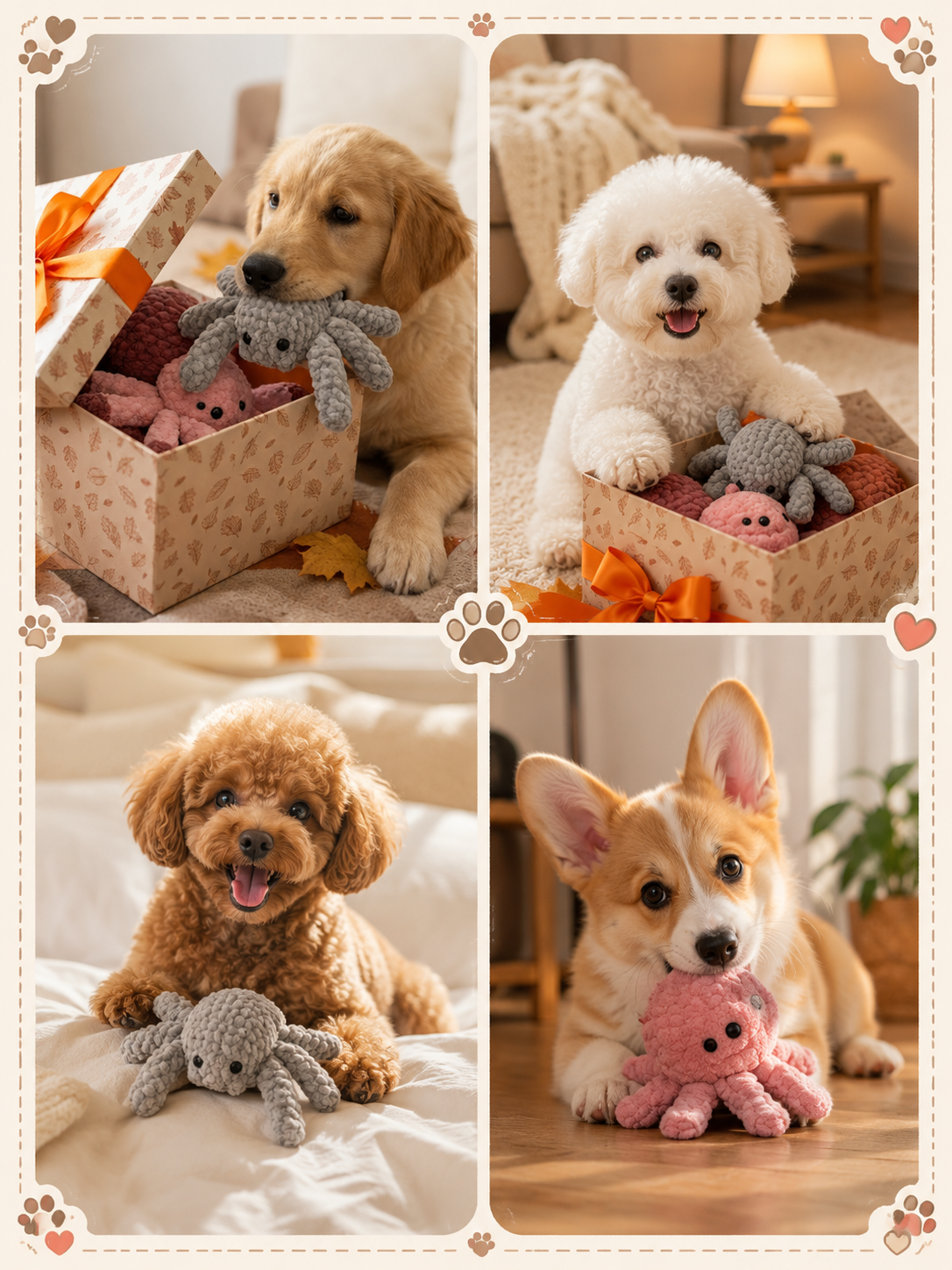
To add a touch of seasonal fun and unique texture to your dog’s toy bin, apripex offers a charming and creative choice: the Halloween Spider Plush - Cute Crochet Spider Stuffed Animal.
This delightful spider plush is designed with a wonderful combination of textures. It features a hand-crocheted exterior that offers a unique, textured grip, paired with ultra-soft plush details.
The contrasting textures provide a novel mouthfeel that dogs find incredibly engaging, while the long, floppy spider legs are perfect for dogs who love to carry and shake their toys.
Whether you are looking for a festive halloween gift for dog companions or simply want to introduce a unique tactile experience to break up the everyday routine, this spider plush is a fantastic way to keep your pet's brain active and curious. |
 |
👉apripex.com/products/halloween-spider-plush-toy
6. The Expert Playbook: How to Master Toy Rotation for Endless Fun
To make your dog enrichment toys last longer and keep your dog excited, pet experts recommend implementing a simple toy rotation system. Here is an easy, step-by-step guide to setting it up in your home:
-
Step 1: Gather and Inspect: Collect all of your dog's toys and check them for safety. Discard any toys that are heavily damaged or have loose pieces.
-
Step 2: Divide into Groups: Separate the remaining toys into three or four distinct groups. Make sure each group has a good balance of different toy types (e.g., one snuffle toy, one squeaky toy, and one textured plush).
-
Step 3: The Weekly Switch: Leave only one group of toys out for your dog to play with. Store the other groups out of sight in a closed closet or bin. Every 5 to 7 days, put away the current toys and bring out a new group.
-
Step 4: Keep It Interactive: Use toys like the Pea Pod Snuffle Toy specifically for supervised interactive play or slow feeding sessions. When the game is finished, wipe the toy clean and put it away. This keeps the toy highly rewarding and prevents it from becoming boring.
| THE TOY ROTATION SYSTEM |
| Week 1: Group A | Squeaky Duck + Ball |
| Week 2: Group B | Pea Pod Toy + Chew Ring |
| Week 3: Group C | Crochet Spider + Rope Toy |
Conclusion: Small Tools, Happier Companions
Caring for our dogs is about more than just providing food and shelter; it is about keeping their minds bright, curious, and free from stress. In our busy lives, dog puzzle toys and enrichment activities provide a simple, effective way to show our pets we care, even when we are occupied with work or daily chores.
By investing in thoughtful, interactive toys—like the snuffle pea pod, the classic squeaky duck, and the textured spider plush from apripex—we can transform our homes into enriching environments where our dogs can thrive.
Explore the apripex collections today to find the perfect interactive toys for your furry family member, and enjoy the peace of mind that comes with a happy, mentally satisfied pup.
Google’s Trending Dog Enrichment Questions: Answered by Experts
To help you navigate your dog's mental wellness journey, we’ve gathered and answered four of the most popular, trending questions pet parents ask Google about dog enrichment and boredom:
FAQ 1: How do I know if my dog is bored or just lazy?
It can sometimes be hard to tell the difference between a naturally relaxed dog and a bored one, as both may spend a lot of time lying down. The key indicator is their behavior when they are awake.
A naturally calm dog will wake up, greet you calmly, eat their food, and return to resting without showing signs of stress.
A bored dog, however, often exhibits "displacement behaviors." They may follow you from room to room, whine for attention, sigh loudly, pace restlessly, or engage in destructive habits like licking their paws or chewing on random household items. If your dog seems restless even after physical exercise, they are likely looking for mental stimulation.
FAQ 2: Can enrichment toys help with my dog's separation anxiety?
Yes, enrichment toys can be highly effective tools for managing mild to moderate separation anxiety, though they are most successful when used as part of a broader training plan.
The primary benefit of toys like the Pea Pod Snuffle Toy is that they provide a positive distraction during the critical first 20 minutes after you leave—which is when a dog's anxiety levels typically spike.
By giving your dog a high-value puzzle to solve as you walk out the door, you help them associate your departure with a rewarding activity. Over time, this helps reframe their emotional response to being left alone.
FAQ 3: How long should I let my dog play with puzzle and snuffle toys each day?
For most dogs, 15 to 20 minutes of structured puzzle or snuffle play per session is ideal. Because mental exercises require a high level of focus, they can be surprisingly tiring for a dog’s brain.
If a dog is left with a difficult puzzle for too long, they can become frustrated and may resort to biting, tearing, or destroying the toy to get the treats inside.
It is always best to supervise puzzle play, offer gentle encouragement when they struggle, and put the toy away once they have successfully retrieved all the treats. This keeps the toy safe and ensures it remains an exciting, high-value activity.
FAQ 4: How does mental stimulation affect my dog’s sleep quality?
Just like humans, dogs sleep much better when they have had a balanced day of both physical and mental activity.
When a dog is physically tired but mentally understimulated, their body may want to rest, but their brain remains active, leading to light, easily disrupted sleep and nighttime restlessness.
By engaging their brains in foraging and problem-solving activities during the day, you satisfy their natural cognitive needs. This mental fulfillment allows their nervous system to fully relax, helping them transition into deeper, more restorative REM sleep cycles at night, which is essential for long-term health and joint recovery.