

Author: Apripex Editorial Team
Published: September 2026
Think about some of the products you use every day. Your phone is no longer just a phone. Your watch is no longer just something that tells time. Your headphones can cancel noise, translate conversations, take calls, and connect you to an entire digital ecosystem. Even a pair of sneakers can now be designed to do much more than simply protect your feet.
There is a bigger consumer trend hiding behind all of this: we increasingly expect one product to satisfy more than one need.
It is not necessarily because people want more features for the sake of having more features. In many cases, people simply want to feel that the things they buy are worth the money, space, and attention they require. If one purchase can solve two problems instead of one, the purchase suddenly feels smarter. A product that gives you comfort and entertainment can feel more valuable than one that only looks good. A gift that is personalized and useful can feel more meaningful than a generic gift. And a product that can become part of several moments in your life has a much better chance of staying around.
This isn't just a marketing idea. Consumer research has been studying the appeal of multifunctional products for years. Research published in the Journal of Marketing Research found that consumers can show a preference for products with multiple features, while research published in the Journal of Consumer Psychology found that multifunctional products can activate an “efficiency goal” in consumers. In other words, there is something psychologically satisfying about feeling that one purchase can accomplish more.
1. Your Phone Is the Easiest Example: From One Device to an Entire Toolbox
The smartphone may be the clearest example of how dramatically our expectations of products have changed.
When the first iPhone arrived, the basic idea was already revolutionary: a device that combined a phone, an iPod, and an internet communicator into one product. But look at what the modern iPhone has become. It is a camera, navigation device, wallet, video player, gaming platform, communication tool, personal assistant, scanner, productivity device, and increasingly an AI interface. Apple continues to add functions that allow the iPhone and its surrounding ecosystem to replace tasks that once required separate products or services. For example, Apple has been expanding Wallet so users can manage passes and even split bills through their iPhone, while newer software features allow the camera and on-device intelligence to help users interact with information in the physical world.
And consumers clearly understand the appeal. We don't usually describe the iPhone as “a phone with a lot of extra features.” We simply think of all of those functions as part of what a smartphone is supposed to be.
That distinction is important.
When an additional feature becomes genuinely useful, it stops feeling like an extra. It becomes part of the product's value.
The same pattern can be seen beyond Apple. Nike, for example, has increasingly experimented with technology that adds new functions to something as familiar as footwear. Its Nike Mind platform uses sensory technology in the sole with the goal of influencing how athletes prepare and recover, while Project Amplify explores powered footwear designed to make walking and running easier. A sneaker that once had one obvious job can now become part of a much broader performance experience.
Of course, this does not mean that every product needs ten different functions. In fact, research on multifunctional products also suggests that consumers can become less enthusiastic when additional features are irrelevant or unlikely to be used. The real opportunity is not simply adding more. It is adding something people actually want.
That is why the most successful multifunctional products often feel surprisingly natural. We don't think, “This product has four features.” We think, “This one thing can take care of several things I need.”
2. Why One Product Solving Two Problems Feels Like a Better Deal
There is a simple reason this idea resonates so strongly with modern consumers: most of us already have too much stuff.
Our homes are full. Our closets are full. Our phone screens are full. And our shopping decisions are full of comparisons. When consumers consider a purchase, they are not only asking whether they like a product. They are increasingly asking whether the product deserves a place in their lives.
Imagine two products sitting on a shelf.
One is beautiful and decorative. The other is beautiful, decorative, and also something you can actually use every day. Even if the second product costs slightly more, it can feel like the better purchase because the value is easier to explain to yourself.
This is where the psychology becomes interesting. Multifunctionality can create a feeling of efficiency: one purchase, multiple uses, fewer separate objects, and more situations in which the product makes sense. Academic research has specifically found that consumers often perceive multifunctional products as more valuable than single-function alternatives.
Think about familiar products in everyday American life. A coffee tumbler is no longer simply a cup; it can become a reusable bottle, travel container, temperature-retaining drink holder, and lifestyle accessory. A fitness watch is no longer simply a watch; it can track workouts, sleep, heart rate, notifications, payments, and other parts of daily life. Noise-canceling headphones are no longer just headphones; they can become a way to work, travel, communicate, relax, and block out the surrounding world.
The common thread is not technology itself.
It is value multiplication.
People enjoy the feeling that one purchase can cover multiple needs. It makes the product easier to justify, easier to remember, and often harder to replace.
And this idea becomes especially interesting when we move away from technology and into something much more emotional: gifts.
3. Even a Personalized Doll Can Now Have More Than One Role
This is where the evolution of the personalized doll becomes particularly interesting.
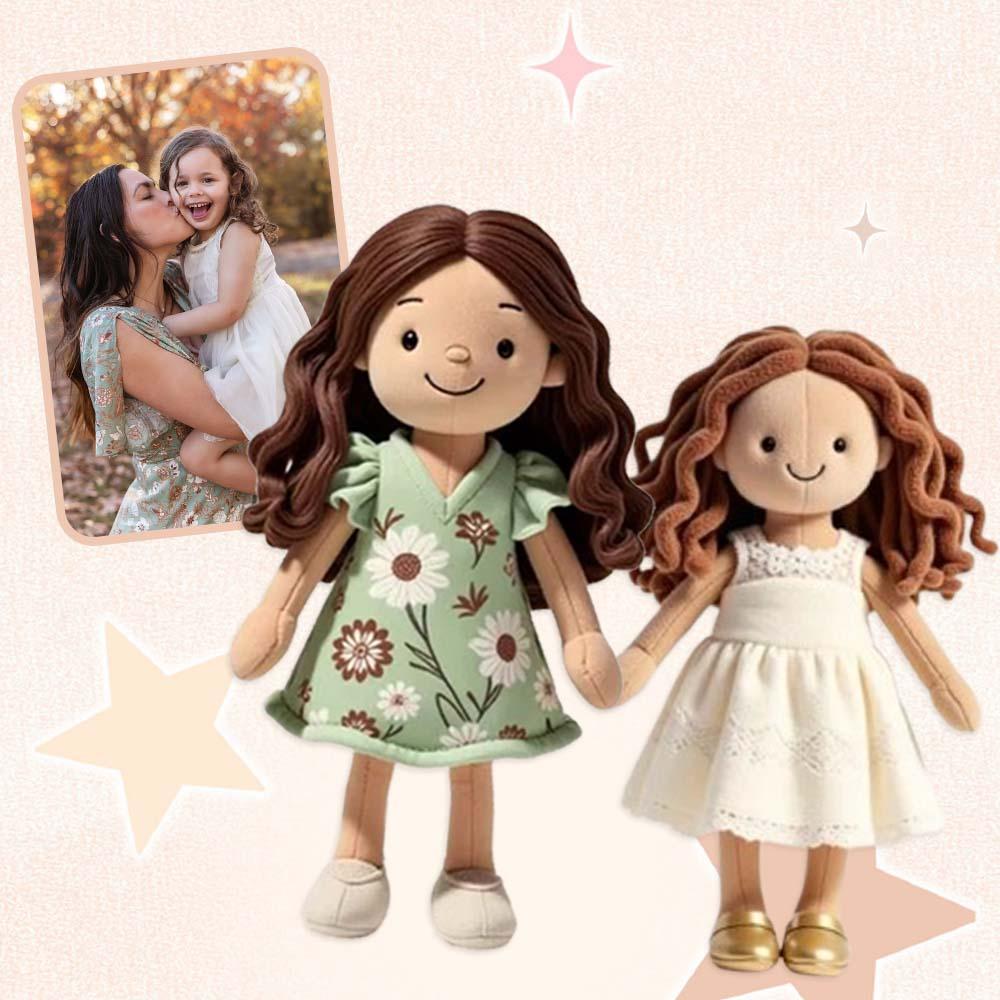
A traditional stuffed animal already has an emotional function. It can be soft, comforting, decorative, playful, or sentimental. A personalized doll adds another layer because it can represent a specific person, pet, relationship, or memory. A photo can become a physical object that someone can actually hold.
Apripex has explored this idea through its collection of [personalized dolls and custom plush gifts]. Instead of purchasing a generic stuffed animal, customers can create something connected to a particular person or memory, turning a simple plush into a keepsake with personal meaning.
But personalization is only one direction this category can take.
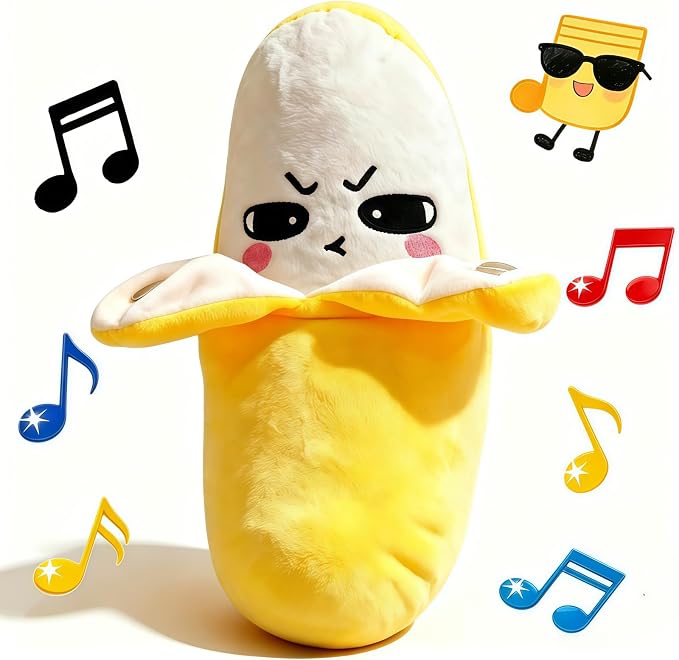
Imagine a plush companion that can also play music. Suddenly, the product is not only something you look at or hug; it can also become part of a child's playtime or a comforting moment. Imagine another plush that can provide gentle warmth. Now the same basic idea of a stuffed companion can also serve a practical comfort function on a cold night.
This is the thinking behind the newer generation of plush products at Apripex: a doll does not necessarily have to stop at being a doll.
Some products can bring music and interaction into the experience. Others can combine the softness of a plush companion with warming or cooling functionality. And personalized plush dolls can add an entirely different kind of value by turning a photograph, person, or memory into something tangible and huggable.
The interesting part is that these functions do not compete with the emotional purpose of the doll. They support it.
A warm plush is still a companion.
A musical plush is still a toy.
A personalized plush is still a keepsake.
The additional function simply gives people another reason to reach for the product.
And that may be the secret behind why these combinations feel so appealing: the extra function does not replace the original purpose. It gives the original purpose somewhere new to go.
 |
 |
 |
4. Maybe the Future of Products Is Not “More Features,” but “More Reasons to Keep Them”
There is a reason this trend feels so familiar. We are surrounded by products that have gradually expanded their roles without us even noticing.
The smartphone replaced several individual devices. Smartwatches absorbed functions that once belonged to phones and fitness trackers. Modern headphones became communication and productivity tools. Athletic footwear is increasingly becoming a platform for performance technology. And now, even something as simple and emotional as a doll can combine personalization, entertainment, comfort, and practical use.
But perhaps the most important change is not technological at all.
It is psychological.
Consumers increasingly want to feel that their purchases have a reason to exist.
We don't necessarily want a house filled with hundreds of objects that each perform one tiny task. We want products that fit naturally into our lives and give us multiple reasons to use them. That is why the phrase “two-in-one” has such natural appeal. It communicates value almost instantly.
Of course, more functions do not automatically mean a better product. The research is clear that irrelevant or rarely used features can actually weaken the appeal of multifunctional products. The strongest products are the ones where the additional function makes sense.
That is the direction we find especially interesting at Apripex.
A personalized doll can preserve a memory. A musical plush can create an experience. A heated plush can provide comfort. And when these ideas are thoughtfully combined with the familiar softness and emotional appeal of a stuffed companion, the product starts to become more than an object.
It becomes something with multiple reasons to stay in your life.
Maybe that is where modern consumer products are heading. Not necessarily toward having the longest list of features, but toward giving us more value, more usefulness, and more meaning from the same thing we already wanted to buy.
Because at the end of the day, the most satisfying purchase might not be the one that gives us the most stuff.
It might simply be the one that makes us think:
“I was only looking for one thing. Somehow, this solved two.”